OHL Books · English
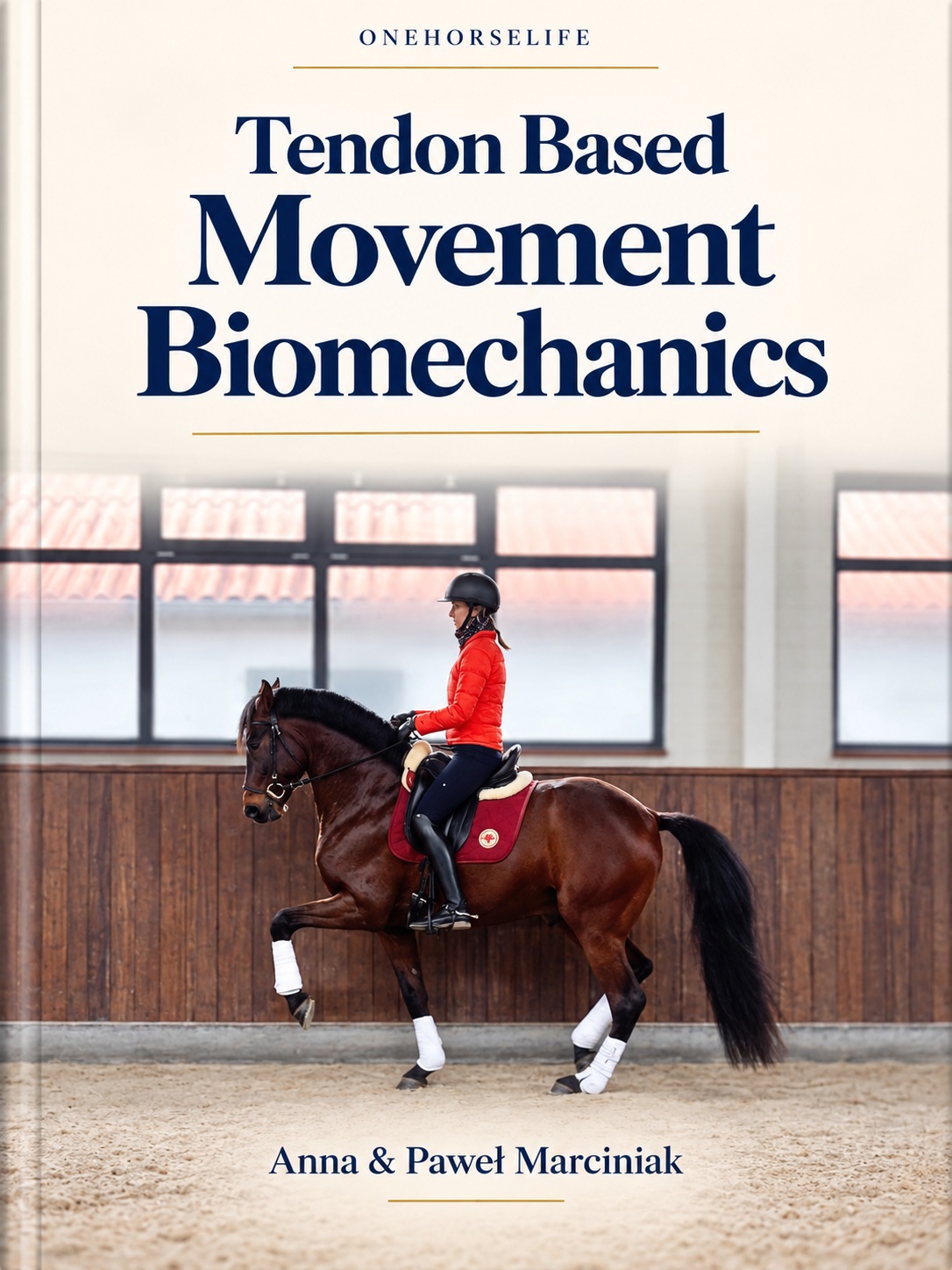
Tendon Based Movement Biomechanics
Stop mistaking tension for strength. Understand the body you are training.
Your horse works hard. But is that work building a stronger, freer body, or teaching him to hold more tension? This revolutionary book takes you inside Tendon Based Movement. Across 33 chapters, you will understand how muscles work and release, how the back and abdominals cooperate, and why the quality of movement matters more than the amount of effort. Recognise what your training is changing. Know what to develop, what to stop repeating, and when to take a step back. Read this book before you decide your horse simply needs more work.
Included in your OHL Books subscription
Opening chapters are free with an account. One subscription unlocks the OHL Books collection. Books are included in membership, not sold separately. See membership details below.
Who this book is for
Every rider, trainer and horse owner makes decisions that shape a horse’s body. You need to understand what those decisions do. If you want strength with suppleness, a back that moves freely and progress you can recognise beyond a completed exercise, this book belongs in your reading.
01 · What you will learn
See why a strong core must still move. Understand how the abdominals support the trunk while the back waves, and why bracing interrupts that cooperation.
Develop your eye for the first signs of lost freedom: a shorter neck, uneven back movement, tighter flanks and a change in the horse’s willingness to work.
Understand how to develop more movement without simply demanding more speed. Follow the role of conscious relaxation, freer pelvic rotation and progressive conditioning.
Make better decisions for the horse in front of you. Understand why an experienced horse still needs time to learn new coordination, and judge progress by how he moves and responds.
From the book
A different task does not automatically create a different movement pattern. A horse can climb a hill or follow a serpentine while keeping the same rigid back. We use variation to develop the movement we have begun teaching through conscious relaxation: a rotating pelvis, a long, waving back, and a relaxed neck. The useful change is how the horse uses his body within the task.Inside the book
- 01Movement as Biology, Not Mechanics →Free
- 02The Energy Path of a Healthy Body →Free
- 03Muscles in the Elastic System →Free
- 04Why Relaxed Muscles Grow Stronger →Subscription
- 05The Micro-Recovery Cycle →Subscription
- 06Elastic Motion vs. Anaerobic Effort →Subscription
- 07Building the Body Through Relaxation →Subscription
- 08How Ligaments Shape the Muscles →Subscription
- 09Postural Remodelling Through Oscillation →Subscription
- 10The Abdominals and Back in Cooperation →Subscription
- 11The Role of Fascia in Shaping the Body →Subscription
- 12From Elastic Load to Muscular Tone →Subscription
- 13Movement as Medicine →Subscription
- 14Reversing Damage from Muscle-Based Training →Subscription
- 15Preventing Injury Through Elasticity →Subscription
- 16Age, Recovery, and Longevity →Subscription
- 17Health Issue: Kissing Spine — From Compression to Expansion →Subscription
- 18The Biomechanical Cause →Subscription
- 19The Elastic Solution →Subscription
- 20Visible and Emotional Healing →Subscription
- 21Prevention Through Elasticity →Subscription
- 22Progressive Elastic Conditioning →Subscription
- 23Nutrition and Recovery in the Elastic Horse →Subscription
- 24Recognising Over-Training and Tension Early →Subscription
- 25Daily Practice for Health →Subscription
- 26Mental Health Through Physical Harmony →Subscription
- 27Starting Young Horses in Elastic Awareness →Subscription
- 28Re-educating Mature Horses →Subscription
- 29The Horse That Improves With Age →Subscription
- 30Health as the Measure of Success →Subscription
- 31The Biology of Beauty →Subscription
- 32From Maintenance to Mastery →Subscription
- 33Harmony as Health →Subscription
Questions about the book
Why should I read this if I already know the exercises?
Because completing an exercise does not tell you what it is doing to the horse’s movement. He can follow a serpentine or climb a hill while keeping the same rigid back. This book takes you beneath the task: how the trunk is supported, when muscles release, where tension interrupts movement, and what genuine progress looks like. You will understand what you are trying to develop with each repetition.
What does this add to Introduction to Tendon Based Movement?
Introduction establishes the connected elastic movement of the horse. Biomechanics takes you deeper into the body you are training: muscular activation and release, cooperation between the back and abdominals, progressive conditioning, and the signs that freedom is being lost. It connects the movement you see with the decisions you make in daily training.
Is this relevant to a mature horse with established habits?
Yes. An experienced horse can still be a beginner in the movement pattern you are teaching. You will understand why familiar bracing does not disappear simply because you ask for a different outline. The book explains the role of conscious relaxation and growing body awareness, and why short experiences of freer movement need time to become dependable coordination.
OHL Books
Get library access
Included in your OHL Books subscription
OHL Books Membership
One subscription. The whole published library.
- Access to every published book and chapter.
- Newly published books are included while your subscription is active.
$5 for the first 3 days
Then $18 per month
VAT and other applicable taxes are excluded.
Renews monthly after the trial. Cancel anytime in your profile.
Sign in
Sign in by email
We will email you a six-digit challenge code. No password required.
By logging in or creating an account, you agree to the Terms and conditions and acknowledge the Privacy Policy. This does not provide consent to optional tracking or marketing.