OHL Books · English
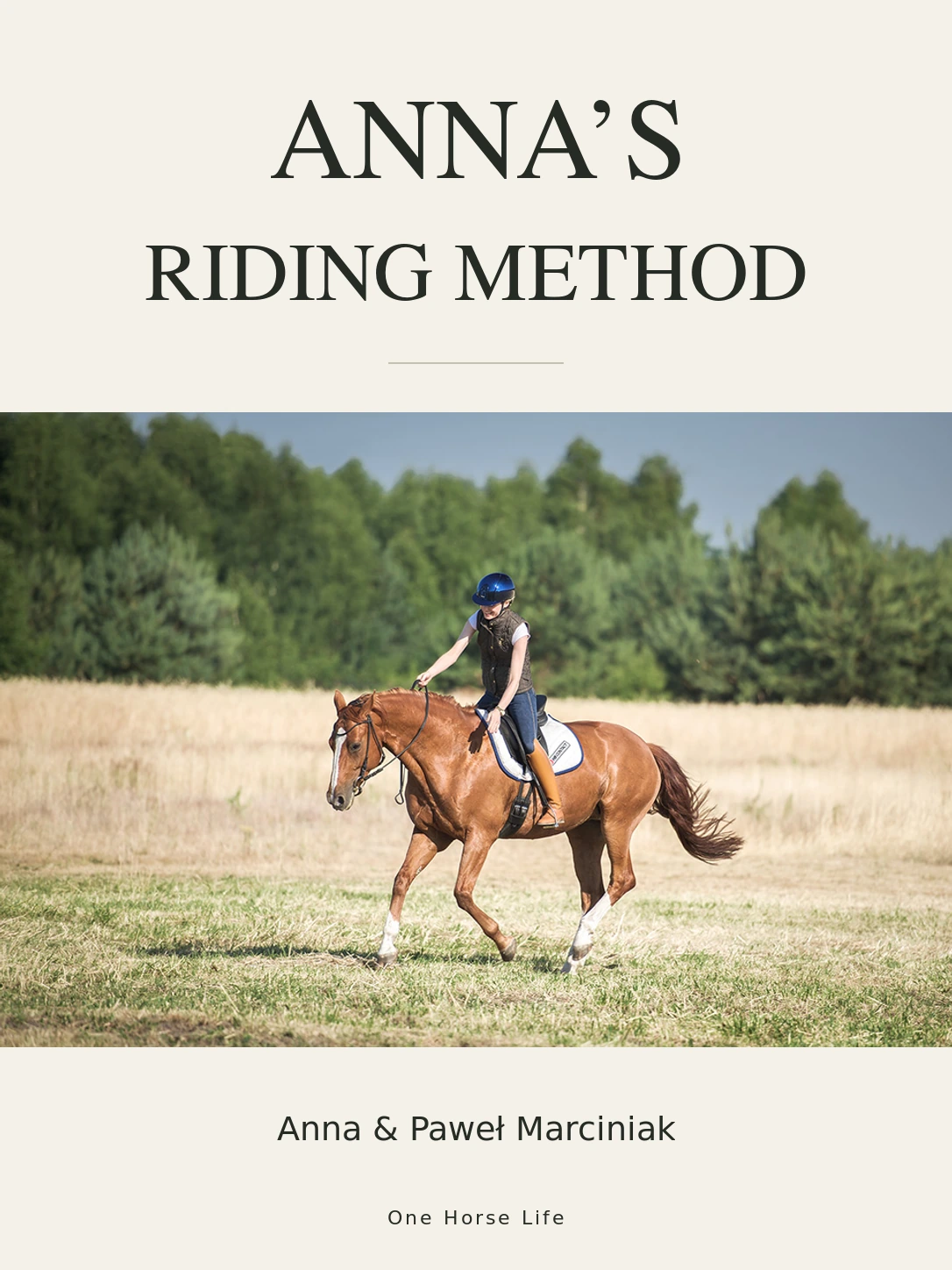
Anna’s Riding Method
Join your horse’s movement. Shape it together.
Riding in unity begins when you become part of your horse’s movement. In Anna’s Riding Method, you first move together, then guide turns, stops and transitions from within that shared movement. You will learn why conditioned cues separate the rider’s actions from the horse’s response, how relaxation makes following possible, and how your upper body, hands and seat work together. Across eight chapters, Anna and Paweł Marciniak explain a riding method built around connection, suggestions and Tendon Based Movement.
Included in your OHL Books subscription
Opening chapters are free with an account. One subscription unlocks the OHL Books collection. Books are included in membership, not sold separately. See membership details below.
Who this book is for
For riders and trainers who want to understand how riding in unity works in practice. Whether you are preparing a young horse, reconsidering familiar aids or developing a more precise way to ride, you will learn the principles behind guiding through your body. The book connects the horse’s preparation and relaxation with the rider’s technique, from a simple turn to shaping transitions and changes of frame.
01 · What you will learn
Experience guiding and following through a practical exercise with two people and reins, then understand how even contact and upper-body rotation guide a turn.
Learn to think of stopping and transitions as movements you make together. Understand how to join them first and then begin shaping them through your body.
Understand why the hands stay passive, how rein length changes the frame, and how support through the legs frees the upper body to guide.
Discover how horse and rider join the same cycles of storing and releasing energy in Tendon Based Movement—and how that shared movement becomes unity.
From the book
The solution is to begin moving together. Only then does the rider begin influencing the movement. These are the two steps: first move together, then shape the movement.Inside the book
- 01Horse Riding Can Be Better →Free
- 02Suggestions Versus Cues →Free
- 03Guiding and Following →Free
- 04How to Turn →Subscription
- 05Starting, Stopping, and Transitions →Subscription
- 06The Role of the Hands →Subscription
- 07The Role of the Seat →Subscription
- 08Moving in Connection, in Unity →Subscription
Questions about the book
How is a suggestion different from a cue?
A cue produces a conditioned response. A suggestion belongs to a different teaching process: when the horse cannot follow, the work focuses on relaxation, releasing the tensions that block the movement and allowing body awareness and learning to develop. Chapter 2 explains this distinction through turning and canter examples.
Is there an exercise I can try away from the saddle?
Yes. Chapter 3 describes an exercise with two people and a pair of reins. One person plays the horse and the other the rider. You compare three ways of guiding and experience how passive hands and movement through the body change the connection.
Does passive mean that the hands never do anything?
No. The hands remain passive when the upper body guides the movement. Chapter 6 also explains their active tasks: adjusting rein length without disturbing the horse and, for riders who already know the technique, applying RTRT from the saddle.
How does the seat support this way of riding?
The legs provide support so that the upper body remains free to guide, while relaxed hips follow the saddle’s movement. Chapter 7 explains this independent seat, the importance of alignment, and why shifting weight or pumping with the hips disturbs the horse.
What connects this method with Tendon Based Movement?
In Tendon Based Movement, the horse stores and releases energy through tendons and ligaments. The final chapter explains how the rider joins these movement cycles and then shapes them from within, as part of one connected, moving body.
OHL Books
Get library access
Included in your OHL Books subscription
OHL Books Membership
One subscription. The whole published library.
- Access to every published book and chapter.
- Newly published books are included while your subscription is active.
$5 for the first 3 days
Then $18 per month
VAT and other applicable taxes are excluded.
Renews monthly after the trial. Cancel anytime in your profile.
Trial eligibility is checked after sign-in.
Sign in
Sign in to get started
We will email you a six-digit challenge code. No password required.
Check your sign-in
We could not connect. Check your connection and try again. If you were requesting a code, check your inbox first: the request may have reached us.
Already have a subscription? Use the email linked to it. A different address may create a separate account.
By logging in or creating an account, you agree to the Terms and conditions and acknowledge the Privacy Policy. This does not provide consent to optional tracking or marketing.
The OneHorseLife approach
onehorselife.com ↗The book begins with the central question: how can horse and rider move together when one gives cues and the other waits to react? The tango analogy and a partner exercise make the difference between cues and guidance tangible. From there, you will explore turning through the upper body, joining the movement of a stop or transition, adjusting the reins without disturbing the horse, and developing an independent seat. The final chapter brings these elements together through Tendon Based Movement. Throughout the book, relaxation is part of how the horse learns and follows, and the rider’s task is to join the movement before shaping it.